|
|
||
|
ANALYSIS/OPINION … “Independent analysis for independent thinkers, examining the Issues that shape our world! |
||
|
|
The Stone Chronicles An African voice Speaks -------------------------------------------------------------------------------------------------------ADVERTISMENT Masakhane This is our time. This is our future! A PEOPLE FIRST MONEMENT ROOTED IN COMMUNITIES. “FOCUSED ON RESULTS”
REBUILDING COMMUNITIES TOGETHER Contact: Phumzile
Komane khayalethu@sunshinecashandcarry.co.za ------------------------------------------------------------------------------------------------------- ADVERTISMENT
Ready to Transform Your IT? Schedule a free, complimentary 1-hour
strategy session with our technology experts. • MONTH-TO-MONTH SUPPORT ------------------------------------------------------------------------------------------------------- ADVERISEMENT
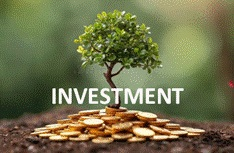
Financial freedom belongs to those who
learn, plan, and take action Achieve your financial freedom by using the
money you already have or will be receiving to generate more money. To do
this you need to develop your financial strategy with a certified financial advisor. A comprehensive financial plan can help you
make the right investment decisions. To develop a strategy that’s right for
you, contact Daniel Stone, one of ABSA’s top wealth managers.
Daniel has been vetted, is qualified, has many years of experience and is
legally bound to act in your best interests. If you’re a South African individual, older
than 18, you get a discretionary annual allowance of R1 million that you can
exchange for foreign currency. In addition, you get an offshore
investment allowance of R10 million.
Cell +27 72 372 6380 or email ------------------------------------------------------------------------------------------------------- ADVERTISEMENT
We Empower The world of work has changed and is
changing faster than ever before. In an era where artificial intelligence,
automation, and robotics are transforming industries, technical
qualifications alone are no longer enough to guarantee long-term professional
success. The future belongs to individuals who can think critically, lead
effectively, communicate powerfully, innovate creatively, and work
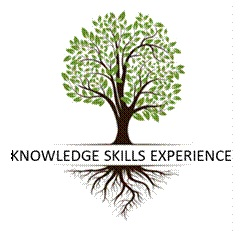
confidently alongside emerging technologies. That future has arrived with New SKILLS A groundbreaking online learning platform
designed to develop the human skills that technology cannot replace We train today’s people for tomorrow’s challenges Visit our website and find out why you need to
register for this career critical development course Why New SKILLS matters Research reveals a growing global soft
skills crisis: ·
Only 31% of employers believe job candidates
possess adequate soft skills. ·
An overwhelming 97% of employers report that
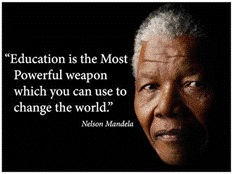
poor soft skills negatively impact workplace performance. WHY EDUCATION IS CRITICAL !!
Education breaks cycles of poverty,
reduces inequality, and drives economic growth by creating a highly skilled
workforce. It also empowers individuals to make informed decisions, fosters
civic participation, and promotes social cohesion, tolerance, and overall
community well-being. |
|
|
11/9/2026 |
The Case for Failure: Institutional and
Economic Collapse A democratically elected government is
constitutionally bound to protect citizens' rights, uphold the rule of law,
and build a sustainable environment where both the social fabric and the
economy can flourish. Yet, despite establishing world-class legal frameworks
and expansive social safety nets post-apartheid, South Africa’s trajectory
has been deeply compromised by decades of systemic corruption, institutional
mismanagement, and political disillusionment. While recent social data shows
a minor recovery and the post-2024 Government of National Unity (GNU) offers
a cautious shift toward structural reform, the underlying reality remains
stark: the country is held back by a critical 33.6% unemployment rate,
infrastructure collapses, and a shrinking tax base. This article argues that
the African National Congress (ANC) has ultimately operated as an ineffective
government, leaving the average South African economically poorer today than
they were at their wealth peak nearly two decades ago. |
|
|
01/08/2026 |
South Africa’s severe electricity
problems Eskom has received over R496 billion in
government bailouts since 2008, with R242 billion before 2023. The utility
carries R337 billion in government-guaranteed debt, risking taxpayer
liability if it defaults. Widespread non-payment by citizens, businesses, and
municipalities has led to over R110 billion in municipal debt to Eskom.
Non-payment stems from poverty, poor service, illegal connections, and
political protests, weakening Eskom’s revenue. Eskom’s history of corruption,
procurement fraud, sabotage, and poor maintenance has caused infrastructure
decay and operational issues. State capture drained resources, leading to
unreliable power stations and reliance on bailouts to stay afloat. Illegal
connections and meter tampering overload local substations, reducing revenue
and causing outages. Solutions include direct revenue collection, smart
prepaid meters, and tariff restructuring for affordability. An urgent need
for private investment, streamlined approvals, and fast-track projects to
build 14,000 km of high voltage lines. Eskom needs to accelerate private
transmission projects and classify grid expansion as strategic
infrastructure. |
|
|
01/08/2026 |
The City of Johannesburg’s severe water
problems. The city’s water originates from the Vaal River system and Lesotho Highlands Project, treated by Rand Water. Despite high Blue Drop scores (98.1%), wastewater infrastructure is critically neglected, with Green Drop scores at 48.8%, indicating pollution risks. Johannesburg’s water infrastructure suffers from corruption, maladministration, and tender fraud, leading to low pressure, outages, and dry taps. The city’s water demand exceeds sustainable levels, driven by rapid urbanization, high consumption, and illegal connections. Aging pipes, especially asbestos-cement types, burst frequently, costing millions in repairs. Infrastructure upgrades include replacing pipes and expanding reservoirs, but progress is uneven and ongoing. Political instability, budget cuts, and municipal debt hinder effective management. Climate variability, including El Nino, threatens to worsen water shortages. Continued infrastructure neglect and high consumption patterns due to high levels of urbanisation threaten long-term water security. |
|
|
20/07/2026 |
The tragedy of South Africa’s human
rights violations South Africa possesses one of the world's
most admired constitutions, promising equality, dignity, and the protection
of fundamental human rights for all its citizens. Yet for millions of South
Africans, these constitutional guarantees remain aspirations rather than
lived realities. Gender-based violence, failing education, xenophobic
violence, inadequate law enforcement, attacks on community activists, and
deep racial tensions continue to undermine the rights the Constitution was
designed to protect. This report examines these interconnected crises,
drawing on official statistics, academic research, and documented case
studies to assess the current state of human rights in South Africa. While
significant progress has been made since 1994, the evidence suggests that
systemic governance failures, social fragmentation, and declining
institutional effectiveness have created an environment in which many of the
country's most vulnerable people continue to be denied the security, justice,
and dignity to which they are constitutionally entitled. |
|
|
17/06/2026 |
SA mainstream media: Dancing to the
puppeteer’s tune? In every democracy, a free and
independent media serves as one of society's most important safeguards,
informing citizens, scrutinising those in power, and presenting competing
viewpoints so that the public can make informed judgments. Yet when news reporting
becomes selective, context is omitted, or inconvenient facts receive little
attention, the media can cease to function as an impartial observer and
instead become an unwitting participant in shaping political narratives. This
raises an uncomfortable but necessary question: to what extent does South
Africa's mainstream media critically examine the narratives promoted by the
state, and when does it simply amplify them? Using the Israel-HAMAS conflict
and South Africa's case against Israel before the International Court of
Justice as a case study, this article examines how narrative framing,
selective reporting, and the omission of material facts can profoundly
influence public perception. In doing so, it explores whether South African
audiences have been presented with the full complexity of one of the world's
most contentious conflicts—or whether they have been encouraged to see only
one side of the story. |
|
|
15/07/2026 |
A possible scenario: What is happening
in France, could it happen in South Africa? France's recent legislative response to
what it describes as "Islamist entryism" has reignited an
international debate about how democratic societies should respond to
long-term ideological movements that seek influence through lawful political,
social, educational, and charitable institutions rather than overt violence.
This article examines whether similar dynamics could, over time, emerge in
South Africa. Drawing on publicly available research, government reports,
security analyses, and geopolitical developments, it distinguishes between
documented evidence and informed speculation to explore a broader strategic
question: if organisations committed to long-term ideological objectives
establish deep financial, political, and social networks within an open
democracy, what implications might this have for South Africa's future? While
some conclusions remain necessarily speculative, the purpose of this analysis
is to encourage informed discussion about risks, institutional resilience,
and the importance of remaining alert to long-term geopolitical trends. |
|
|
12/07/2026 |
The big debate: Is globalism a threat
and if so, how? Globalism has become one of the
defining and most controversial forces shaping the twenty-first century. To
its advocates, it represents greater prosperity, technological progress,
international cooperation, and collective solutions to problems that transcend
national borders. To its critics, however, it is steadily eroding national
sovereignty, weakening local economies, increasing systemic vulnerabilities,
and concentrating unprecedented power in the hands of multinational
institutions and global elites. This analytical opinion article examines both
perspectives by exploring the economic, political, social, and strategic
consequences of globalism. Rather than accepting popular narratives at face
value, it dissects the evidence, considers the competing arguments, and asks
a fundamental question: does globalism ultimately serve the interests of
ordinary citizens, or has the pursuit of global integration created risks
whose long-term consequences are only now beginning to emerge? |
|
|
10/07/2026 |
Data Centres: South Africa's quiet
digital revolution—and the risks they bring? Artificial intelligence is transforming
the global economy at breathtaking speed, and behind every AI application
lies an immense physical infrastructure that most people never see. Data
centres have become the backbone of modern banking, healthcare, government,
commerce and digital communications, quietly processing and protecting the
information that underpins everyday life. Yet this technological revolution
is placing unprecedented demands on electricity, water resources,
cybersecurity and public governance. In South Africa—where ageing
infrastructure, water losses and energy constraints already present
significant challenges—the rapid expansion of data centres raises important
questions about sustainability, resilience and the protection of citizens' personal
information. This article examines how these interconnected issues are
unfolding, separating evidence from speculation while exploring the
opportunities, risks and governance challenges that will shape South Africa's
digital future. |
|
|
06/07/2026 |
People don't resist change. They resist
being changed. Will history repeat itself? The article explores a timely and
politically significant question: whether the Democratic Alliance's
participation in South Africa's Government of National Unity has
fundamentally altered its ideological identity. Rather than simply examining
changes in leadership, it considers whether the party's evolving positions on
welfare, healthcare, state ownership, and economic policy represent pragmatic
adaptation to political realities or a departure from its classical liberal
foundations. By comparing the DA's historical principles with its current
policy direction, this analysis assesses the broader implications for South
African politics, voter realignment, and the future of free-market democracy
in a country increasingly defined by coalition governance and ideological
compromise. |
|
|
04/07/2026 |
Are the November 2026 municipal
elections leading us towards chaos? South Africa stands on the threshold of
one of the most consequential local government elections since the advent of
democracy. As voters prepare to choose representatives for municipalities
across the country, they will be confronted not only by the failures of the
past, but also by an unprecedented political landscape shaped by more than
500 registered parties, fragile coalition politics, growing public
frustration, and escalating political violence. While many hope the elections
will usher in a new era of accountability and effective governance, others
fear they may instead deepen instability, administrative paralysis and social
unrest. This analysis examines the forces driving South Africa toward this
political crossroads and assesses whether the 2026 municipal elections are
likely to strengthen local democracy—or accelerate the country's descent into
governance chaos. |
|
|
03/07/2026 |
Mine nationalisation: The dangerous promise that
could bankrupt South Africa Credit:
Researched, written and compiled by Tony Stone If South Africa nationalises its mines,
who actually gets richer? According to Julius Malema, the answer is ordinary South
Africans. According to the historical evidence, the answer is far less
comforting. Across Africa, governments have already tried taking control of
strategic mining industries. Ghana tried it. Zambia tried it. Both expected
greater national wealth. Both instead saw collapsing production, disappearing
investment and worsening economic decline. South Africa now stands at a
similar crossroads. This article examines whether mine nationalisation is
genuinely a path to economic justice—or whether history suggests it is one of
the country's greatest economic risks. |
|
|
|
|
|
|
DISCLAIMER: This website provides original researched, compiled and aggregated content that is intended to give you, the reader, an accurate and truthful overview of what is happening in South Africa. The views and opinions contained herein are fact checked and comply with Section 16 of the South African Constitution, that defines lawful “Freedom of Expression , that entrenches the right to and guarantees the right to say, create, and publish what they want, with explicit exclusion of harmful forms of speech that invoke hate and/or incite violence. The World Wide Web, Google and Gemini AI technology is used for the research. |
||




Content © Copyright Tony Stone 2026 and as acknowledged